


There is a chessboard on the big screens at the Esports World Cup 2026 in Paris Expo Porte de Versailles, surrounded by the production, noise, and visual language of an event built around competitive gaming. For Mike McCabe, that is not an oddity. It is a glimpse of where esports is heading.Chess was added to the Esports World Cup in 2025 and is back in Paris this year, with the 2026 tournament carrying USD 1.5 million prize money. The field includes players such as Magnus Carlsen, Alireza Firouzja and India’s four Grandmasters – Arjun Erigaisi (Gen.G Esports), Nihal Sarin, Aravindh Chithambaram, Pranesh M (all S8UL Esports)The game is also the obvious outlier in the EWC programme. It has been played competitively for centuries. Its rules did not emerge from a game publisher. Its stars did not grow up inside the esports industry.
Chess in Esports : The odd game out
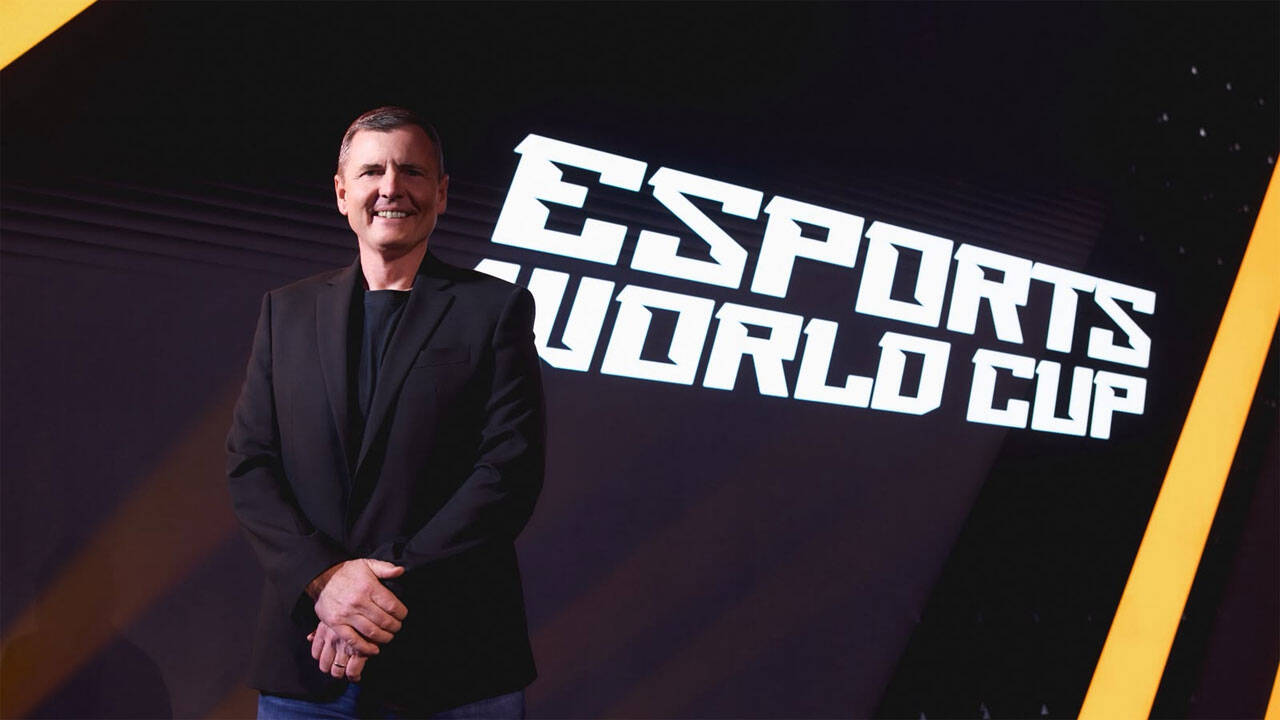
And yet, sitting alongside the other titles in Paris, McCabe believes chess fits. “For us, what qualifies as an esport really comes down to the community and the ecosystem,” McCabe, COO and Deputy CEO of the Esports Foundation, told The Times of India in Paris on the sidelines of the Esports World Cup 2026.“And so when we look at any game that people are playing digitally, if there’s a really strong competitive ecosystem, there’s organised events, there’s rankings, there’s an understanding and there’s an interest from people to watch and spectate, then it can live within the world of esports.”McCabe isn’t suggesting that chess has somehow crossed over and become a video game. That isn’t really the point. What has changed is the way the EWC is looking at the game.For him, the question isn’t whether chess looks like Rocket League or League of Legends. It is whether people play it competitively, whether there is an organised circuit around it, whether rankings and rivalries matter, and, crucially, whether people want to watch.That puts chess in an interesting place in Paris. It doesn’t have to shed its history to sit alongside the newer games. It can arrive with all of it – the centuries of tradition, the familiar board, the Grandmasters – and still be part of this very modern, very loud version of competitive sport.And perhaps that is what makes chess more interesting to the EWC than simply being another title on the schedule. It tests how far the definition of esports can stretch without losing what makes the game itself recognisable.“What’s unique about chess versus all the other esports, the other 23 games that we include in the tournament, is that it has a heritage that goes way beyond any of us and any of the world of traditional digital interactive entertainment,” McCabe said.“So it really is unique in that way. The rules have been there for generations.”“And what I love about it is it’s the esport that we have here as part of the tournament that has that bridge between generations. I see lots of parents here with their kids. They’ve taught their kids to play this game.”That, for McCabe, is not just a nice feature of having chess at the EWC. It is part of the reason he thinks it works.“They didn’t teach them how to play Rocket League or they didn’t teach them how to play League of Legends, but they taught them how to play chess,” he said. “And they’re able to enjoy this together.”“And I think it’s a magical moment.”There is some evidence in his own experience of the tournament that the chess audience is behaving differently from what he has seen around some of the other games.“I know from many of my friends who’ve had more people hit me up this week for tickets than any other week of the seven weeks we’ve had,” McCabe said.That is the part of the chess story that is easy to miss if it is viewed simply as another title added to an esports schedule.The EWC is using chess to reach beyond the audience that already knows its games. Chess, in turn, gets a very different setting in which to present its best players.McCabe has India on his mind when he talks about what the EWC could look like several years from now.But first comes a larger point. The definition of the games inside the EWC, he says, is not going to remain fixed.“I think we’ve always thought about it from the ecosystem, the audience and the viewership and the spectacle,” McCabe said.“The game definition is going to be something that’s going to constantly evolve over time.”The EWC has been built around scale. This year’s event has 24 games and a record USD 75 million prize pool across the competition.
Paris was never the plan
The move to Paris was not how the 2026 EWC was supposed to happen. Riyadh was meant to host it again before security concerns around the conflict in the region forced a change of plan.The Foundation quickly reframed Paris as the first international chapter of the EWC – and, now that the tournament is here, McCabe sees the move as evidence that the event was capable of doing what its organisers had always said it could.But the more interesting part of McCabe’s answer is what he thinks happens after that. He is leaving the definition of the EWC – and perhaps esports itself – deliberately open, to the point where he is already looking five years ahead and wondering what games, formats and competitions might sit here that don’t exist today.“And I’m excited what in five years time we’re sitting down here and we’re talking about what we’ve included. What is the latest innovation? What is the new competitive landscape that people are competing against?” he said.“Because that human passion is competing against each other. We’ve always done it ever since we first got onto this planet.”“And so that’s something that I think is unique. And we’re not constrained in the way that the traditional sport may be constrained.”“This is going to be a constantly new field of play that we explore.”Chess, then, is not necessarily the end point of that thinking. It is the current example.It also helps explain why McCabe is less concerned about whether a game looks like traditional esports and more interested in whether people care enough to compete, watch and follow its players.
An IPL-sized ambition
That becomes particularly interesting when he talks about what he wants the EWC to achieve in India. Asked what he would like to have proved wrong five years from now, McCabe does not start with the size of the prize pool or the number of games.“I’d love that players were walking along the streets in Chennai and being mobbed in the same way as an IPL cricketer is being mobbed,” he said.“That idea of people are recognized for their incredible abilities and they have the fandom, that would be one thing for me.”It is a very specific comparison. The IPL has spent years turning cricketers into recognisable sporting personalities, with franchises, rivalries, broadcasts and fan bases extending beyond the sport’s traditional audience. McCabe wants esports players to reach a similar level of recognition.That ambition is also part of the reason the EWC has expanded beyond individual games into clubs, teams and a wider competition between organisations. But Paris has given McCabe another reason to believe the model can travel.The move from Riyadh was completed in a remarkably short period. The EWC may describe Paris as its first international chapter, while McCabe sees the relocation as evidence that the property can operate beyond its home market.“Esports has always been mobile,” he said. “It’s always been an event that has taken place in different parts of the world, different world tournaments, whether it be League of Legends Worlds or Call of Duty, majors have happened all around the planet.”The difference, he argues, was the speed. “What’s different is the pace with which this was done. Those events normally take many months to prepare and to be able to build the groundwork.”The EWC had to move a global event to another country, build it and operate it in a short period.“This is like moving, well it is, it’s a global sporting event to a completely different country designing, building and operating in an incredibly short time frame,” McCabe said.“And what it’s shown is how partnership between a government, between the publishers, the clubs and ourselves has been able to make, honestly, a miracle happen.”For McCabe, Paris therefore answers two different questions. Chess has shown that the EWC does not necessarily have to restrict itself to the conventional boundaries of esports.Paris has shown that the EWC itself does not necessarily have to remain in one place. The harder question is whether both ideas can be sustained.McCabe knows the EWC has been built aggressively, with investment helping it reach a scale that traditional sports properties took decades to achieve.“So if you think about traditional sport that takes decades, if not longer, to build to a global scale, we just wanted to shortcut that,” he said. “And so we’ve accelerated massively.”The commercial test now becomes more important. McCabe points to the arrival of major brands such as Allianz, Hilton Hotels and Sony, alongside the traditional technology and gaming companies that have historically supported esports.“What we’re seeing is now a move from brands that are associated with esports, whether they be technology partners or peripherals or others, to actually having blue-chip partners involved.”The next piece, he says, is media rights. “And that’s something that we will need to change and evolve that gives funding to the clubs. It gives funding to the partners, the publishers, and also helps us to build that long-term sustainability.”There is a lot still to be proved. But chess has already given McCabe something that the EWC’s more conventional games cannot. A connection to people who may not think of themselves as esports fans.Parents bringing children to watch a game they already know. Grandmasters representing esports organisations. Traditional chess audiences watching their players in an environment built around gaming. And a new generation of players being introduced to the game through a tournament that would otherwise have nothing to do with their usual sporting calendar.McCabe sees that as the beginning rather than the conclusion. The EWC will return to Riyadh next year. It may eventually move again. The list of games may change. The definition of what belongs in the competition may change with it.But when McCabe looks five years ahead, the thing he wants to see is not another statistic.“I would love to be operating in bigger and bigger venues,” he said. “For us, it’s reaching more and more people and we’re incredibly privileged to be able to have this opportunity to put on this amazing event.”“And I just want to be able to connect with more people over the years to come,” he added.
