

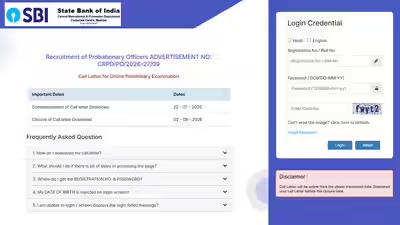

SBI PO Admit card 2026: The State Bank of India has released the SBI PO Admit Card 2026 for the Preliminary examination on its official website, sbi.bank.in. Candidates who successfully registered for the recruitment process against 1,500 Probationary Officer vacancies can now access their hall tickets using their registration number and password or date of birth.Admit card that was issued on July 22, 2026, is an essential document that must be possessed to gain admission to the examination hall. It is recommended that the candidate goes through the information contained on the call letter right from the point of downloading it as it contains vital information such as date of examination, reporting time, venue of examination among others.Examination calendar and Selection processThe SBI PO Preliminary examination shall be held on August 1 & 2, 2026, through Advertisement Number CRPD/PO/2026-27/09. The recruitment process comprises three stages: Preliminary examination, Main examination and Interview. The admit card has been made available only through the online mode on the bank’s official website.Candidates can log in using their registration number along with their password or date of birth to download the call letter. They are advised to retain a printed copy, as entry to the examination hall will not be permitted without the admit card.Steps to download the hall ticketApplicants can download the admit card by visiting the official SBI website and selecting the Careers section. They must then open the Join SBI page, choose Current Openings, locate the recruitment notification for Probationary Officers and click on the Preliminary examination call letter link. After entering the required login credentials, candidates can access, download and print the admit card for future use.Details and documents requiredThe hall ticket contains the candidate’s name, gender, registration or roll number, date of birth, parents’ names, photograph, signature, category, examination date, reporting time, examination centre address, post applied for and examination guidelines. Candidates should report any discrepancy to the concerned authorities without delay.On the exam day, the aspirants will have to bring their admit card in print form along with their photo identity proof like Aadhaar Card, PAN Card, Passport, Voter ID, or Driving Licence and also recent passport-sized photographs. They are supposed to report early at the exam centre, check the location, follow all the instructions given by exam authorities, sit on the assigned seat, and not take any unauthorized things inside the exam hall.