
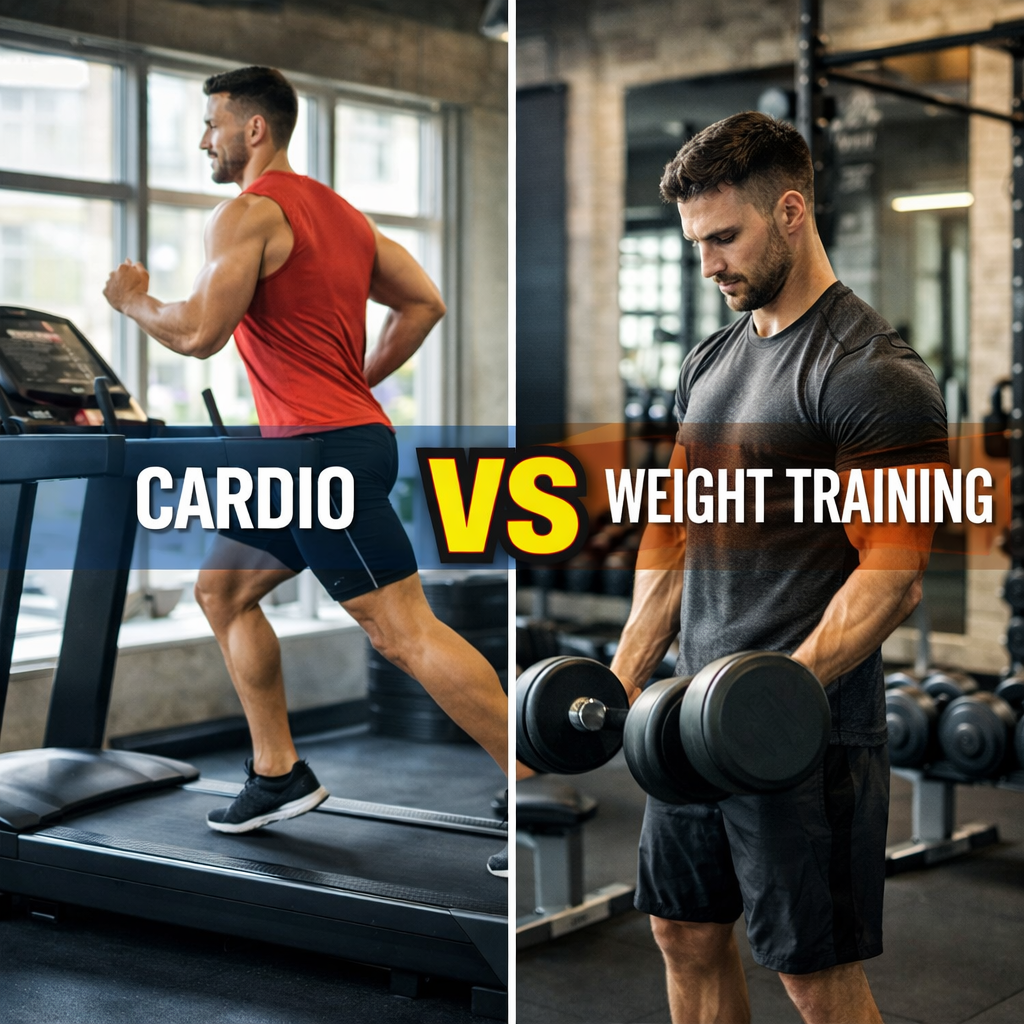
When it comes to losing weight, one of the most common questions people ask is: Should I do cardio or weight training? Both forms of exercise are effective, but they work in different ways.
Understanding the difference between cardio and strength training can help you choose the right workout strategy for faster fat loss. In this guide, we’ll break down the benefits, differences, and the best approach for maximum weight loss results.
What is Cardio?
Cardio, also known as aerobic exercise, includes activities that increase your heart rate and improve endurance.
Examples:
- Running or jogging
- Cycling
- Treadmill workouts
- Skipping rope
- Swimming
Benefits of Cardio:
- Burns calories quickly
- Improves heart health
- Helps reduce body fat
- Easy for beginners
Cardio is often the first choice for people starting their weight loss journey.
What is Weight Training?
Weight training, also called strength training, involves using resistance to build muscle.
Examples:
- Dumbbell exercises
- Barbell lifting
- Machine workouts
- Bodyweight training (push-ups, squats)
Benefits of Weight Training:
- Builds lean muscle
- Boosts metabolism
- Helps burn fat even at rest
- Improves body shape and strength
More muscle = higher calorie burn throughout the day.
Cardio vs Weight Training: Key Differences
| Factor | Cardio | Weight Training |
|---|---|---|
| Calorie Burn | High during workout | Moderate during workout |
| Fat Loss | Fast initial fat loss | Long-term fat loss |
| Muscle Building | No | Yes |
| Metabolism | Temporary boost | Long-lasting boost |
| Body Shape | Less defined | More toned & defined |
Which is Better for Weight Loss?
Short Answer: Both are important
- Cardio helps you burn calories quickly
- Weight training helps you burn more calories over time
The best results come from combining both.
The Science Behind Fat Loss
When you do cardio, your body burns calories immediately. But once you stop, the calorie burn slows down.
Weight training, on the other hand:
- Builds muscle
- Increases resting metabolism
- Helps your body burn fat even when you’re not working out
This is called the afterburn effect (EPOC).
Best Workout Plan for Weight Loss
Beginner Plan:
- 3 days cardio (walking, cycling)
- 2 days light weight training
Intermediate Plan:
- 2–3 days cardio
- 3 days weight training
Advanced Plan:
- 3 days strength training
- 2 days HIIT cardio
- 1 active recovery day
Always include rest days for recovery.
Diet Matters More Than Workout
No matter how much you exercise, weight loss won’t happen without proper diet.
Eat:
- Protein-rich foods
- Whole grains
- Fruits and vegetables
Avoid:
- Junk food
- Sugary drinks
- Processed foods
70% diet + 30% workout = best results
Common Mistakes to Avoid
- Doing only cardio and ignoring strength training
- Lifting too heavy without proper form
- Not being consistent
- Skipping rest days
- Poor diet habits
Final Verdict
So, cardio vs weight training — which is better?
If your goal is fast calorie burn, cardio is great
If your goal is long-term fat loss and body shaping, weight training is better
Best approach: Combine both for maximum results
Consistency, proper diet, and a balanced routine are the real keys to successful weight loss.