




India’s proposed Great Nicobar Project, one of the country’s largest infrastructure initiatives, has triggered an intense debate over development and environmental protection.The project aims to transform Great Nicobar Island, a largely forested island in the Andaman and Nicobar archipelago, through the construction of a transhipment port, an international airport, a township and a power plant. Supporters see it as a strategic investment in trade, connectivity and economic growth. Critics see it as a test of whether large-scale infrastructure can be built in one of India’s most ecologically sensitive landscapes without causing irreversible damage.The island’s location is central to the government’s case. Great Nicobar lies close to the Malacca Strait, one of the world’s busiest shipping corridors and a critical maritime chokepoint linking the Indian and Pacific Oceans. About 23 million barrels of oil pass through the strait each day, accounting for nearly 30% of global seaborne oil trade and making it the world’s largest oil-transit chokepoint by volume. Recent disruptions along major shipping routes — from the Red Sea to the Strait of Hormuz — have underscored why countries are increasingly focused on securing access to critical maritime corridors.The debate has become particularly contentious because the project is planned in one of India’s most ecologically significant island ecosystems. While environmental clearances have been granted and legal challenges have largely been resolved, scientists and conservationists continue to question whether the project’s environmental impacts can be adequately mitigated.
What is the Great Nicobar Project
The Great Nicobar Project is a mega infrastructure initiative planned on Great Nicobar Island in the Andaman and Nicobar archipelago. The proposal consists of four interconnected components: an international container transhipment terminal (ICTT) at Galathea Bay, a greenfield international airport, a township and a power plant.The project was formally outlined in the government’s 2021 master plan, Holistic Development of Great Nicobar Island, which envisages the creation of a new economic centre built around maritime services, trade, logistics and tourism.According to the plan, the objective is to “leverage the locational advantage of being on international sea route and develop Great Nicobar as a sustainable, green, global destination for business, trade and leisure.”At the centre of the proposal is the transhipment port, intended to capture a larger share of cargo traffic moving through the Malacca Strait. The airport is expected to support tourism and commercial activity, while the township and power plant would provide the infrastructure needed to support long-term urban development.The project is planned in phases between 2025 and 2047.
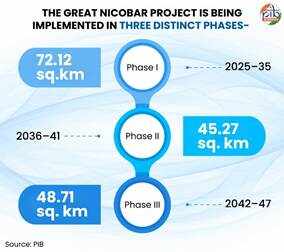
Great Nicobar Project (PIB)
Official plans indicate that development will eventually cover around 166 square kilometres, or roughly 18% of Great Nicobar Island’s total area of about 910 sq km. Nearly 131 sq km of this area consists of forest land approved for diversion.Government estimates indicate that approximately 18.65 lakh trees exist within the project area, while around 7.11 lakh trees may be felled in phases during implementation.
An island of exceptional ecological significance
Much of the controversy stems from what Great Nicobar already is.The island forms part of the Great Nicobar Biosphere Reserve and contains two protected areas — Galathea National Park and Campbell Bay National Park. Dense tropical forests cover much of the landscape, giving way to mangroves, wetlands, coral reefs and seagrass beds along the coast.The result is an ecosystem that supports species found nowhere else in the world.The island’s forests are home to endemic birds, reptiles, amphibians and mammals, while the surrounding waters support coral reefs, mangrove ecosystems and rich marine biodiversity. Galathea Bay is also recognised as one of the most important nesting grounds for leatherback sea turtles in the northern Indian Ocean. The leatherback, the world’s largest marine turtle, is classified as vulnerable globally.Significantly, many of the environmental characteristics now cited by critics were also documented in government studies prepared before the project was approved.In 2020, the Centre proposed an Eco-Sensitive Zone around Galathea National Park and described the region as ecologically significant because of its biodiversity, endemic wildlife and the dependence of indigenous communities on forest resources. The notification also noted that much of Great Nicobar was already covered by protected areas and tribal reserves, leaving limited space available for development.The same notification referred to natural hazards such as tsunamis and sea-level rise.The government’s 2021 pre-feasibility report went further, describing how the 2004 Indian Ocean tsunami and associated tectonic subsidence reshaped large parts of the island. The report noted that parts of Great Nicobar effectively experienced “land drowning”, altering coastlines, mangrove forests and coastal habitats.Citing research by the Wildlife Institute of India, the report stated that mangrove cover across the Nicobar Islands declined by around 97% after the tsunami. It also referred to studies documenting changes in mangrove composition, including the appearance of species not previously recorded from the islands, possibly due to seeds and debris transported from neighbouring regions.The report also highlighted the ecological importance of the island’s marine environment. Coral reefs occur around much of Great Nicobar’s coastline, with varying levels of diversity and extent. According to the document, these reefs were severely affected by the 2004 tsunami and later experienced bleaching during the global coral bleaching event of 2008, although signs of recovery, including new coral recruits, were observed in some locations.
Why has the project drawn environmental scrutiny
The project has faced environmental scrutiny since receiving environmental and forest clearances in 2022.Several environmental groups and conservationists challenged the approvals before the National Green Tribunal (NGT), arguing that the scale of development and the ecological sensitivity of the island required closer examination.The concerns eventually reached the NGT, which constituted a high-powered committee to examine issues ranging from forest diversion and wildlife impacts to coral reefs, coastal ecosystems and the adequacy of environmental assessments.In February 2026, the tribunal dismissed fresh challenges to the project and allowed it to proceed, while directing authorities to ensure strict compliance with environmental safeguards attached to the approvals.The tribunal observed that environmental protection and national development objectives both needed consideration. It noted the project’s strategic location near the Malacca Strait and accepted findings that concerns raised during litigation had been examined during the clearance process.The ruling effectively cleared the way for implementation. It did not, however, end the broader scientific and environmental debate.
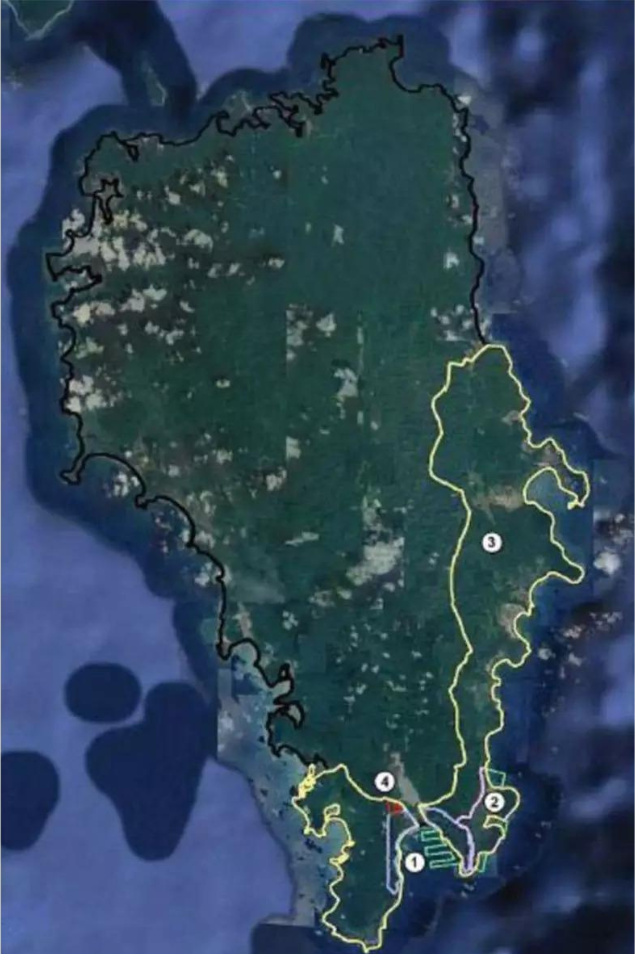
Govt begins work on airport at southernmost tip of India on Great Nicobar Island (ANI)
Concern 1: Forest loss and habitat fragmentation
For many ecologists, the biggest concern begins with the forests.Nearly 131 sq km of forest land has been approved for diversion, making it one of the largest forest clearances granted in recent years.Scientists argue that the issue extends beyond the number of trees that may be felled. Large infrastructure projects can fragment continuous forest landscapes through roads, settlements, utility corridors and construction zones.Fragmentation can alter wildlife movement, affect breeding habitats and increase vulnerability to invasive species and other ecological disturbances. Such concerns are often amplified on islands, where species tend to have smaller geographic ranges and fewer alternative habitats.Conservationists also note that Great Nicobar contains some of India’s least disturbed tropical forests, making ecological restoration particularly difficult if habitats are significantly altered.The government argues that environmental considerations influenced project design from the outset.According to the 2021 master plan, multiple development alternatives were evaluated using criteria that included forest cover, biodiversity, coastal ecology and impacts on tribal communities. Authorities say a more compact development layout was ultimately selected because it required less forest diversion than alternative proposals.The plan also states that large portions of the island, including pristine western and northern regions, were excluded from development options. Officials further maintain that compensatory afforestation, phased implementation and biodiversity management plans will help reduce environmental impacts.
Concern 2: Wildlife and leatherback turtle habitat
The debate becomes even sharper around Galathea Bay.Researchers have long identified the bay as one of the most significant nesting grounds for leatherback sea turtles in the region. Environmental groups argue that port construction, increased vessel traffic, artificial lighting and associated human activity could affect nesting behaviour.Scientists have also highlighted the vulnerability of endemic island species that occur nowhere else in the world. Because many of these species occupy small ranges, even relatively localised habitat changes can have disproportionate ecological effects.Project documents note that both leatherback and olive ridley turtles have historically nested along Great Nicobar’s beaches. They also record that turtle nesting activity was disrupted after the 2004 tsunami significantly altered coastal morphology, although some turtles later returned to nest on the island.For critics, that history illustrates both the ecological importance of the coastline and the vulnerability of nesting habitats to large-scale environmental change.The government has stated that environmental clearance conditions require wildlife conservation measures, monitoring programmes and mitigation plans. Project proponents argue that construction and operational impacts can be managed through these safeguards.The NGT accepted the position that wildlife-related concerns had been examined during the environmental approval process, while directing authorities to comply strictly with clearance conditions.
Concern 3: Coastal and marine ecosystems
Beyond forests and wildlife, scientists have also focused on what happens offshore.
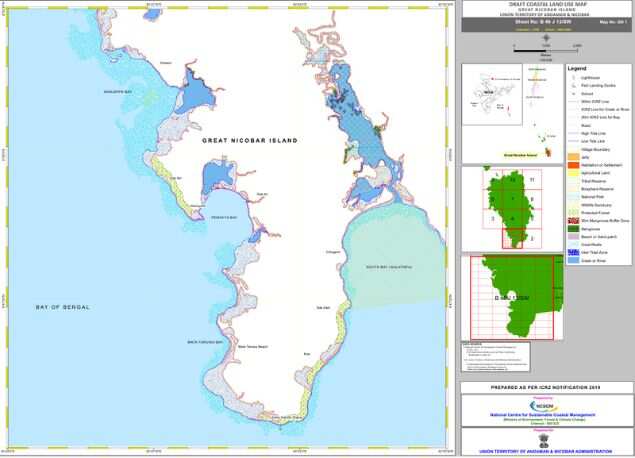
Presence of corals (NCSCM, 2020)
The proposed transhipment terminal will require major coastal infrastructure and reclamation activity. Environmental groups argue that such interventions could affect coral reefs, seagrass beds, shoreline processes and other marine habitats.Researchers have also raised concerns about cumulative impacts that may emerge over decades as shipping traffic, urbanisation and associated infrastructure expand.Some experts have questioned whether baseline environmental data adequately captured the complexity of marine ecosystems around Great Nicobar.The island’s location in a seismically active region has added another dimension to the debate. Great Nicobar experienced significant effects during the 2004 Indian Ocean tsunami, prompting some researchers to argue that long-term geological and climate-related risks should remain central to planning decisions.Environmental groups note that the project’s own pre-feasibility report documented coral reefs around much of the island and acknowledged that these ecosystems had already experienced major disturbances from the 2004 tsunami and subsequent coral bleaching events.
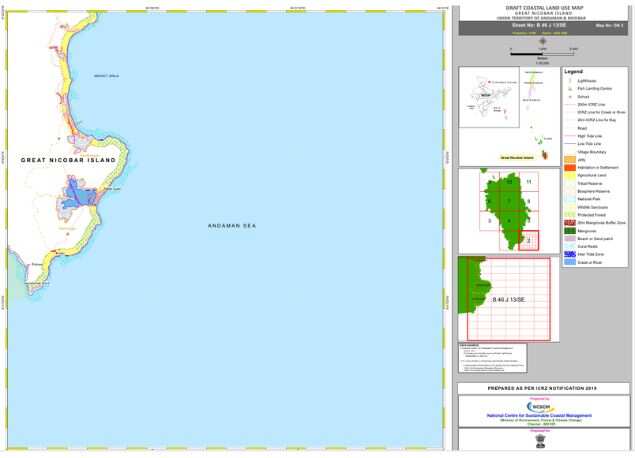
Presence of coral reefs (NCSCM, 2020)
The government, however, argues that environmental considerations were integrated into project design. According to the 2021 master plan, alternative sites and layouts were evaluated on the basis of coral density, coastal morphology, compliance with Island Coastal Regulation Zone requirements and other environmental criteria.Authorities say the selected configuration avoided large areas of coral habitat and was chosen partly because it involved lower environmental costs than alternative options.
Indigenous communities and development
Although environmental concerns have dominated public discussion, questions have also been raised about indigenous communities on the island.Great Nicobar is home to the Shompen, a particularly vulnerable tribal group, as well as Nicobarese communities.Environmental and tribal rights groups have expressed concern that large-scale development and future population growth could indirectly affect traditional lifestyles, access to resources and social conditions.Government documents state that impacts on tribal communities were considered during site-selection studies. According to the master plan, several areas associated with Shompen habitation were deliberately excluded from development alternatives.Authorities have also emphasised that much of the planned urban development is concentrated along parts of the south-eastern coast that are considered less frequently used by indigenous communities.
Can development and conservation coexist?
At the heart of the Great Nicobar debate is a question that extends well beyond a single island: how much ecological change is acceptable in pursuit of economic and strategic objectives?Government planners argue that the project has been carefully designed to minimise environmental impacts while creating jobs, improving connectivity and strengthening India’s position along one of the world’s most important maritime routes.Ecologists and conservationists do not necessarily dispute the island’s strategic importance. Their concern is whether mitigation measures can fully offset ecological changes in a landscape that remains one of India’s most intact island ecosystems.With clearances in place and implementation moving forward, the debate is shifting from whether the project should proceed to whether the safeguards built into it will work as intended. The answer may only become clear over the decades-long lifespan of the project itself.
