



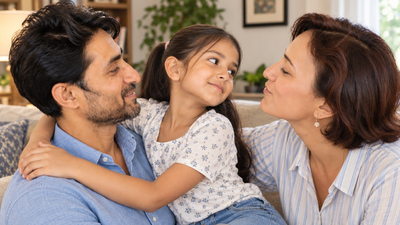
A child who happily follows one parent’s instructions may argue with the other over the smallest things. They may be chatty and playful with one parent but quiet and reserved with the other. They may run to one parent after a bad day and seek the other when they want to play, explore or negotiate for something.For parents, these differences can be confusing. It can even feel unfair. “Why does our child listen to you but not me?” or “Why does she become so difficult only when I am around?” are questions many parents find themselves asking.
22 Sept 2026 | 14:56
Does your child tell you everything about school? What helps them open up?
But children are not necessarily being inconsistent- and their behaviour does not automatically mean that they love one parent more.Developmental psychology suggests that children develop individual relationships with each caregiver. Those relationships are shaped by everyday experiences: who comforts them when they are upset, who sets boundaries, who plays with them, who helps with homework, who handles bedtime and, importantly, how each parent responds when the child is overwhelmed.Research on attachment suggests that children can have different attachment relationships with different caregivers, while both relationships can contribute to emotional development and regulation.
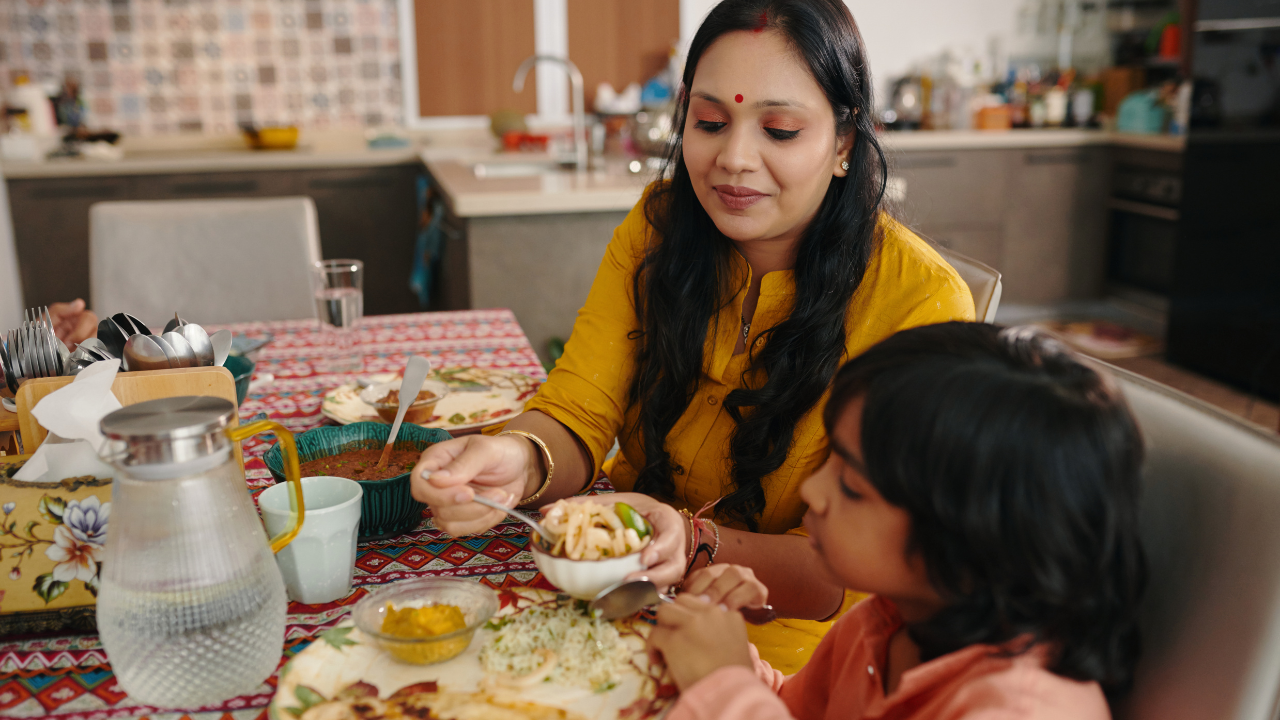
A child may behave differently with each parent without there necessarily being a problem.
The same child can be different with different parents
Attachment is not simply something a child “has” and then carries unchanged into every relationship. It develops through repeated interactions between the child and caregiver.A study examining mother-child and father-child attachment found that relationships with mothers and fathers can have distinct patterns, while attachment to both parents can contribute to children’s ability to regulate emotions.This helps explain why a child may behave differently with each parent without there necessarily being a problem.One parent may be the person associated with routines and rules. Another may be the one who spends more time playing. One may usually handle school-related responsibilities, while another may be the person who sits beside the child at bedtime and listens to their worries.Over time, children learn what to expect from each relationship.So when a child behaves differently with each parent, the more useful question may not be, “Who does my child prefer?”, but “What kind of relationship has my child developed with each of us?”
Does acting out mean the child feels safer?
This is where one of the most popular parenting claims needs some nuance. You may have heard that children “save their worst behaviour” for the parent they feel safest with. There is some psychological reasoning behind why a child might become more emotionally expressive around a trusted caregiver. But research does not establish that every child who tantrums, argues or becomes demanding with a particular parent is doing so because they feel safest with that parent.Children’s behaviour is influenced by several factors- tiredness, hunger, overstimulation, temperament, the environment and what happened earlier in the day.The American Academy of Pediatrics notes that children may act out when they are struggling with stress or emotions they do not yet have the skills to communicate clearly.Consider a child who has spent the entire school day following instructions, managing friendships and controlling their reactions. They may appear perfectly fine at school and then burst into tears when they reach home.That does not necessarily mean they were “pretending” to be fine all day. It may simply mean that the demands of the day caught up with them.And if a particular parent has become their usual source of comfort, that is the person they may naturally seek when the emotional load becomes too much.
Emotional security does not mean perfect behaviour
Another misconception is that a securely attached child should be calm, obedient and emotionally easy to handle. Attachment research paints a different picture.In practical terms, emotional security is less about whether a child throws tantrums and more about whether they have a reliable relationship in which they can seek comfort, receive support and gradually learn to manage difficult feelings.A child can therefore be securely attached and still say, “I hate you!” during a tantrum. The important part is what happens around that moment. Does the parent help the child calm down? Can they acknowledge the emotion without giving in to inappropriate behaviour? Can they reconnect after the conflict? These repeated experiences teach children that difficult emotions do not automatically threaten the relationship.
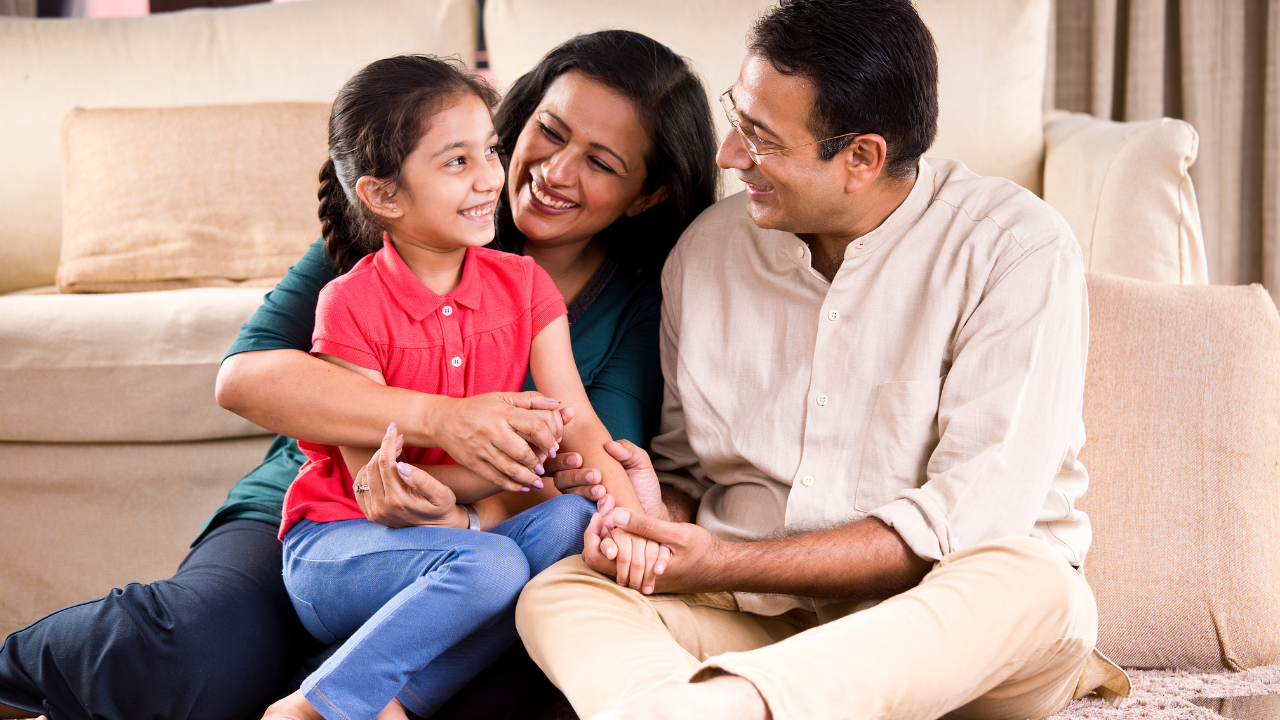
A child may turn to one parent for reassurance and another for encouragement to explore.
Why one parent may get more tears
Sometimes the difference is surprisingly ordinary. A child may become clingy when one parent returns from work because that parent has been away all day. Another child may argue more with the parent who spends the most time enforcing routines simply because there are more opportunities for conflict.A parent who handles bedtime may see more meltdowns simply because children are tired at that time of day. This is why behaviour needs to be viewed in context. Instead of concluding, “My child behaves badly with me,” parents can look for patterns: When does it happen? What happened immediately beforehand? What does the child seem to need? How does the parent respond?Those questions often reveal more than the behaviour itself.
The parent’s response matters too
Children are also learning from how adults respond to emotions. If a child says, “I am scared,” and a parent immediately dismisses the feeling, the child gets a different message from one who hears, “I can see that you’re scared. Tell me what happened.” This process is sometimes described as emotion socialisation– the ways parents respond to and talk about children’s emotional experiences.Listening when a child talks about school. Sitting beside them after a nightmare. Helping them name anger rather than simply telling them to stop crying. Setting a boundary while still acknowledging the feeling behind the behaviour.
Both parents can become a child’s safe base
Research has increasingly moved beyond the idea that attachment should be understood only through the mother-child relationship. Studies looking at both parents suggest that attachment to mothers and fathers can each contribute to children’s emotional and behavioural development.That does not mean the child must behave identically with both. In fact, expecting identical behaviour may miss the point.A child may turn to one parent for reassurance and another for encouragement to explore. They may be more physically affectionate with one and more talkative with the other. These differences can exist within healthy family relationships.What matters is whether the child experiences each relationship as reasonably predictable, responsive and emotionally available.
What parents should look at instead
So, if your child behaves completely differently with you and your partner, there is no need to immediately turn it into a competition. Watch the relationship rather than the tantrum.Does your child come to you when hurt? Can they tell you when something is bothering them? Do they seek you out for reassurance? Can you set limits without making affection conditional? After an argument, can the two of you reconnect?These may tell parents considerably more about emotional comfort than whether the child is more obedient with one parent. Harvard’s Center on the Developing Child describes responsive back-and-forth interactions between children and caregivers as “serve and return” – everyday exchanges that help build the foundations for social and emotional development.Ultimately, children do not need two parents who respond to them in exactly the same way. They need relationships in which they can be heard, comforted, guided and given room to grow.So the next time a child who is perfectly behaved with one parent suddenly becomes emotional, demanding or argumentative with the other, the behaviour may be worth looking at- but not necessarily as a sign of favouritism.Sometimes, it is simply a glimpse into how differently the child has learned to connect with the two people who matter most in their everyday world.
