




You read the same chapter twice. Then three times. You underline half the page, highlight a few definitions and still, when you close the book, the details seem to disappear.It is a familiar problem for students: the more they reread, the more familiar the chapter feels – but familiarity is not necessarily the same as remembering it.
28 Sept 2026 | 08:18
Does your teenager tell you about their friends, or do you often have to ask? How much do you know about their social life?
Research on learning has repeatedly found that some of the techniques students rely on most, including rereading and highlighting, are less effective for long-term retention than methods that make the brain actively retrieve information. Amajor review of 10 common learning techniques, published in the Psychological Science in the Public Interest, found that practice testing and distributed practice had the strongest evidence of effectiveness.That does not mean a 15-minute routine can make an entire textbook chapter permanently stick in one sitting. Memory needs repeated exposure and, ideally, spaced revision. But a focused 15 minutes can be used to turn passive reading into active learning.One viral study routine describes this as a five-step, Japanese-inspired method.
1. Break the chapter into smaller sections
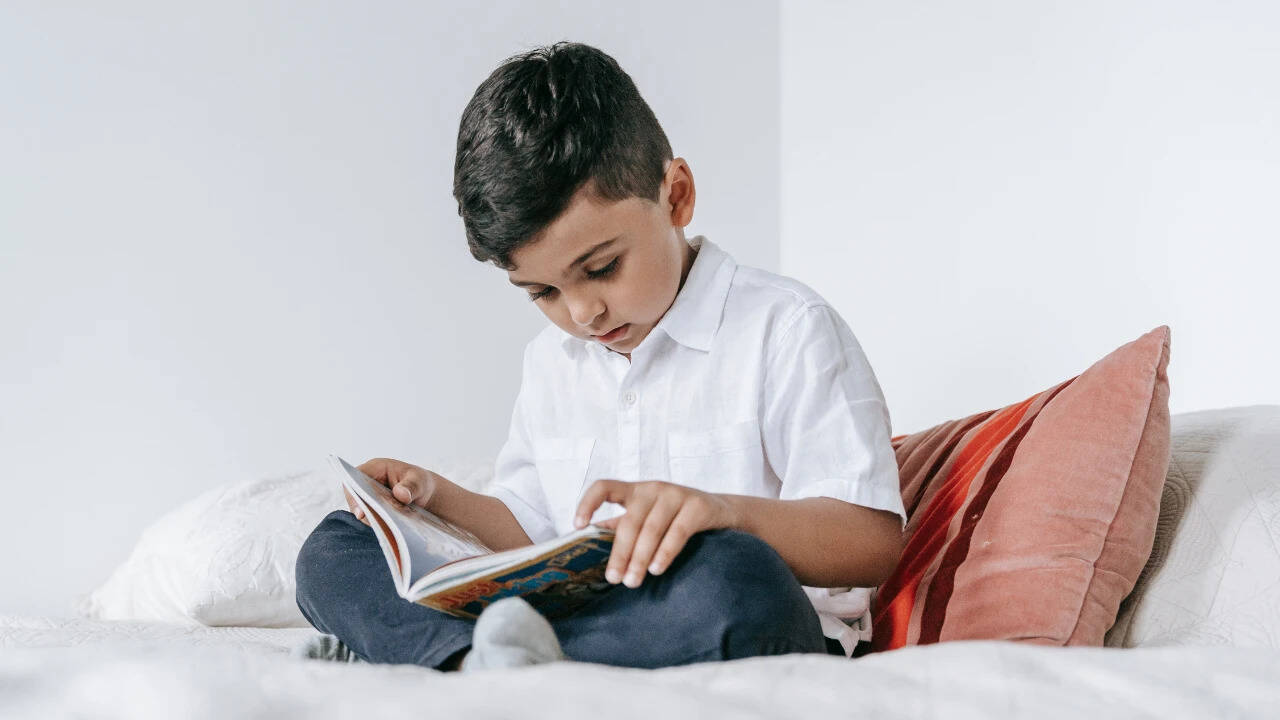
Breaking a long chapter into smaller sections can make studying feel more manageable for children.
Instead of telling yourself, “I have to remember this entire chapter,” divide it into manageable pieces.For example, a 20-page science chapter could be split into:
- definition and introduction
- first concept
- examples
- second concept
- diagrams or processes
- summary
Spend a few minutes understanding one section before moving to the next.This is not a magic Japanese memory technique, but breaking information into meaningful chunks is consistent with what researchers know about learning and cognitive load. Recent research on the use of visuals in teaching also found that meaningful segmentation of content can matter when students are trying to understand and retain information.The important point is not to divide a chapter randomly. Each section should have a clear idea or question attached to it.For example, instead of reading three pages on photosynthesis, ask: What is photosynthesis? Where does it happen? What does the plant need? What does it produce? That immediately gives your brain something to look for.
2. Close the book and try to remember
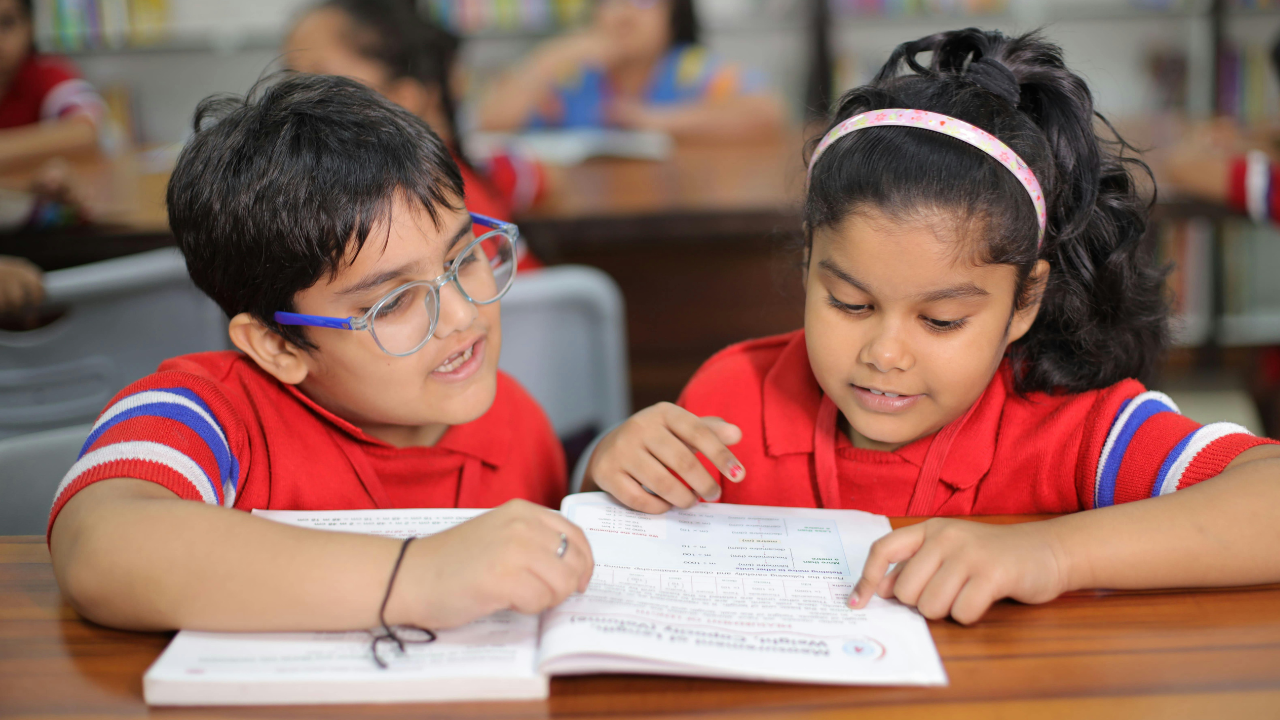
Reading key points aloud can add another way for children to engage with what they are studying.
This is the step with some of the strongest evidence behind it.Read a section for a few minutes. Then close the book.Without looking, ask yourself:What were the three main points?Can I explain the process?What example did the author give?What terms do I remember?Do not worry if you cannot remember everything. The struggle to retrieve the information is the point.This is known as retrieval practice, and it has been extensively studied. A 2006 review by Henry Roediger and Jeffrey Karpicke described the “testing effect”: being tested on information can improve later retention more than simply studying the material again.A later review in the Annual Review of Psychology concluded that practising retrieval shortly after learning can slow forgetting and that the benefit appears across different types of material and learners.So instead of spending all 15 minutes looking at the chapter, spend part of that time looking away from it.That may feel less comfortable. It is also the point.
3. Turn difficult information into a picture

Drawing a diagram or creating a mental picture can help children connect and organise information.
Some information becomes easier to remember when you attach it to a diagram, image, sequence or simple mental story.If you are studying the water cycle, for instance, picture water moving from the sea to the clouds, falling as rain and returning through rivers.If you are studying a historical event, create a simple mental timeline.If you are learning a biological process, draw it using arrows.This idea is sometimes called dual coding – combining words with meaningful visual representations. But it is worth avoiding the exaggerated claim that simply “seeing and hearing something stores it in two places in the brain”.The evidence is more nuanced.A 2026 meta-analysis of 56 studies examining visual materials in classroom teaching found an overall positive effect, particularly when visuals were clearly connected to the explanation and when unnecessary visual details were avoided.So the trick is not to decorate your notes with colourful pictures. Make the visual carry information.A simple flowchart explaining a process is likely to be more useful than a page filled with unrelated doodles.
4. Read the key points aloud

Asking children to explain a lesson in their own words can reveal what they understand and where they need help.
Reading aloud – ondoku in Japanese – is a genuine Japanese practice, particularly in language and reading education. Research has also examined ondoku as a teaching activity; for example, a 2021 practitioner research study involving 59 Japanese elementary-school students investigated computer-mediated ondoku practice for pronunciation.But there is an important distinction.There is not enough evidence to claim that reading a textbook chapter aloud automatically makes you remember it better simply because you are seeing and hearing it.Reading aloud can nevertheless be useful as an additional active step. When you explain or read an important point aloud, you have to process the sentence rather than merely letting your eyes move across it.Try reading only the most important definitions, formulas, dates or conclusions aloud.Even better, turn the sentence into your own words.For example, instead of repeatedly reading, “Mitochondria are membrane-bound organelles responsible for producing cellular energy,” say:“Mitochondria are the parts of a cell that help produce energy.”The second version is easier to retrieve because you have actively processed it.
5. Teach the chapter back to yourself

Spaced revision can help children retain what they learn better than relying on a single long study session.
This may be the most revealing final test.Imagine that a friend has missed the class and asks you to explain the chapter.Put the book away and start talking.“Basically, this chapter is about…”Then explain the main idea, the important terms and the connection between them.If you get stuck, do not immediately reread the entire chapter. Look up only the part you could not explain, then close the book and try again.This resembles the learning technique known as self-explanation.In a classic 1989 study, Michelene Chi and colleagues examined how students explained worked examples while learning. Students who generated more meaningful explanations showed better understanding of the principles behind the examples.Self-explanation is not as strongly supported as practice testing and distributed practice overall, but the 2013 review by Dunlosky and colleagues rated it as a promising technique with moderate utility.
The 15-minute routine
The original viral routine can therefore be made more evidence-based:Minutes 1–3: Break it downDivide the chapter into meaningful sections and identify the key questions.Minutes 4–6: Understand and visualiseRead one section and turn important processes or relationships into a simple diagram, sequence or mental image.Minutes 7–9: Close the book and recallWrite or say everything you can remember without looking.Minutes 10–12: Check and read key points aloudOpen the book, identify gaps and read only the important information aloud.Minutes 13–15: Teach it backClose the book again and explain the chapter in your own words.And there is one step missing from most “remember a chapter in 15 minutes” hacks: come back to it later.So after your first 15-minute session, revisit the material the next day. Try to recall it again without looking. Then return to it after a few days. The goal is not to make the chapter look familiar. It is to make your brain retrieve it when the book is no longer in front of you.That small shift – from “Let me read this again” to “Let me see what I can remember without looking” – is where a study session can become much more effective.
