


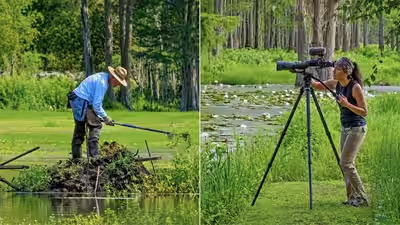
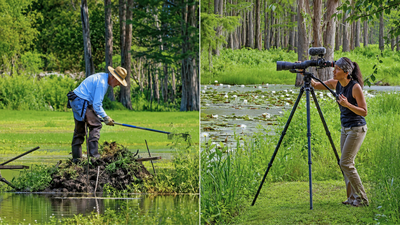
A Florida couple made an unusual decision more than a decade ago when they bought a 45-acre cypress swamp beside their home in Tallahassee, Florida, rather than allowing the land to be cleared or developed. Jim Stevenson and Tara Tanaka purchased the swamp in 2007 after recognising its importance as a wetland habitat. What followed was years of hands-on conservation work that transformed their private property into a refuge for birds and other wildlife. By 2022, the US Fish and Wildlife Service reported that the sanctuary was home to 275 nesting wood storks, along with herons, egrets, ducks, alligators, otters, beavers, foxes and other animals. Their effort also helped preserve an important wetland ecosystem close to a growing urban area.
The Florida couple bought a swamp to protect it
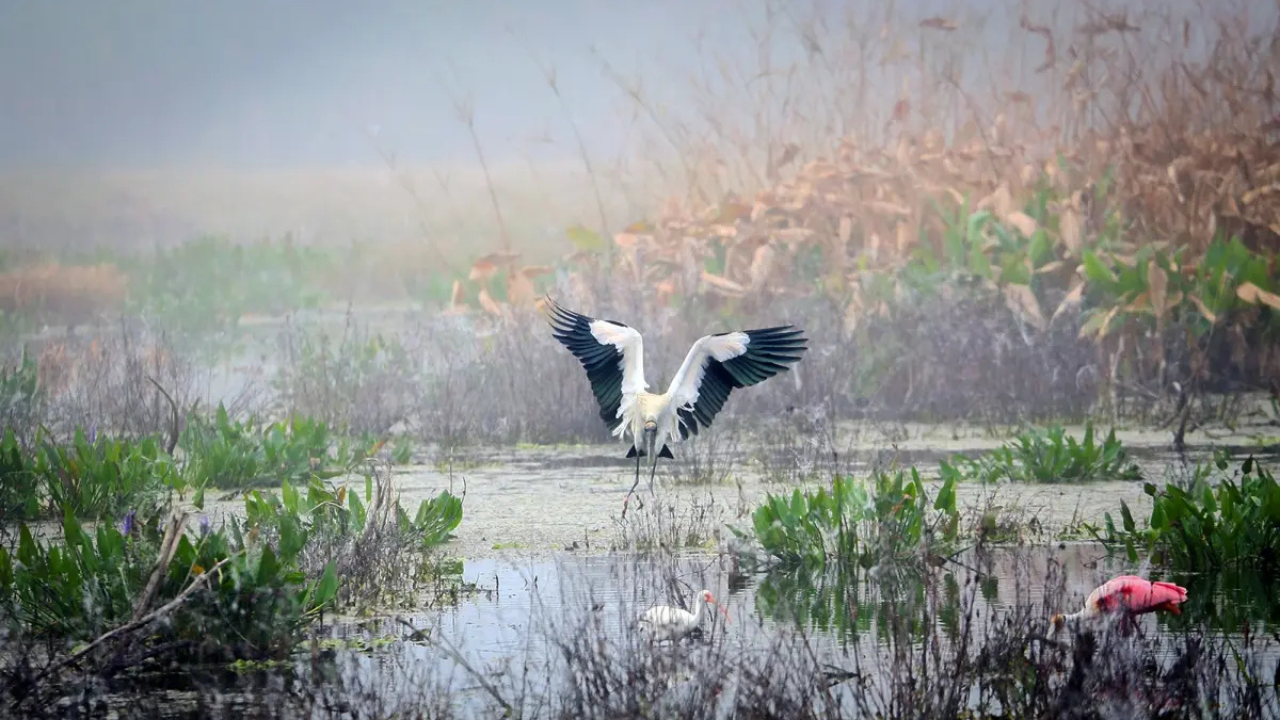
Stevenson and Tanaka had already lived beside the wetlands for years when they became concerned that the cypress swamp could eventually be cleared. They decided to purchase the adjoining 45 acres in 2007, turning land that could have been viewed as undesirable or developable into a privately managed wildlife preserve. WFSU reported that Stevenson, a retired state park biologist, understood the ecological value of the swamp, while Tanaka became closely involved in documenting its wildlife through photography and video. The couple’s property eventually became an important nesting site for wading birds, demonstrating how privately owned land can contribute to wider wildlife conservation.Wood storks became the most spectacular sign of the swamp’s ecological value. The US Fish and Wildlife Service reported in 2022 that 275 wood storks were nesting at the sanctuary, with the colony having grown gradually over the years. The birds share the wetland with great blue herons, great egrets, little blue herons and green herons, while anhingas, common gallinules, wood ducks and black-bellied whistling ducks also nest there. Roseate spoonbills visit the property as well. The wood storks’ presence is particularly significant because the species depends on healthy wetlands, suitable nesting trees and the right water conditions to reproduce successfully.
Jim began managing the habitat by hand
The sanctuary’s transformation was not simply a matter of buying the land and leaving nature alone. Stevenson began managing the habitat himself, including before the couple formally purchased the swamp. He would paddle into the wetland and pull Chinese tallow trees from the water by hand because dense vegetation could interfere with the open-water conditions wood storks need for feeding. He also uses prescribed fire on surrounding land to manage habitat, while mechanical equipment has been used to clear dense vegetation from floating islands. Stevenson even created a small island where alligators could bask, which can indirectly help nesting birds because alligators can deter raccoons and other predators from reaching nests.
Tara turned the backyard into a wildlife observatory
For Tanaka, the swamp became both a conservation project and an extraordinary place to document wildlife. The award-winning photographer and videographer uses high-magnification equipment to observe animals without disturbing them, and her office overlooks the wetland. WFSU reported that she could watch wood storks arriving with nesting material and observe other animals from close to her home. The property has hosted hundreds of wading birds at a time, while wildlife recorded there has included bobcats, alligators, otters, beavers and several species of foxes. Tanaka has also been able to recognise individual wood storks returning to the rookery year after year.
The land was permanently protected
The couple eventually took another important step to ensure the sanctuary would remain protected beyond their own ownership. In 2016, the Apalachee Land Conservancy placed a conservation easement on their property in perpetuity. Such an agreement restricts future development while allowing the land to remain privately owned. The easement helps prevent the wetland from being converted for residential, commercial or other incompatible uses. Tanaka described the restrictions by saying that there was no shooting or fishing and that even the frogs were protected. The arrangement gave the couple a stronger legal mechanism for preserving the habitat they had spent years managing.
The swamp benefits far more than birds
The sanctuary’s importance extends beyond the wood stork colony. Wetlands provide habitat for numerous species while also helping regulate water and support water quality. WFSU noted that protected wetlands around Tallahassee provide benefits to the wider community, including the region’s water resources and the Floridan Aquifer. The swamp therefore serves as both wildlife habitat and part of a broader natural system. Its location is particularly striking because the 45 acres sit close to a developed urban area, showing how even relatively small pieces of protected wetland can provide valuable ecological functions.
Their conservation work inspired other landowners
Stevenson and Tanaka did not keep their experience limited to their own property. Before the COVID-19 pandemic, they held quarterly sessions for private landowners interested in managing their properties for wildlife. The sessions reportedly attracted around 45 to 50 people and regularly filled to capacity. Stevenson shared advice on prescribed fire, native plants, wildflowers and habitat management, while the couple used their own sanctuary as an example of what private conservation can achieve. Their approach reflected a wider reality in the US Southeast, where private landowners control large areas of habitat and can play an important role in protecting wildlife outside traditional public reserves.
The wood stork has since made a remarkable recovery
The story of the couple’s swamp is also part of a much larger conservation success. Wood storks were once in serious decline in the US and were listed under the Endangered Species Act in 1984. Their breeding population has since recovered substantially, with the US Fish and Wildlife Service reporting that the number of nesting pairs had more than doubled compared with the time of listing. In February 2026, the Service announced that the US breeding population had recovered sufficiently for the wood stork to be removed from the federal list of endangered and threatened wildlife. The Service estimated the current breeding population at about 10,000 to 14,000 nesting pairs across roughly 100 colony sites.
A swamp that became a wildlife legacy
What began with a couple buying a piece of land they feared could be cleared ultimately became a long-term conservation project. Stevenson and Tanaka protected the cypress swamp, managed invasive vegetation, supported nesting habitat and legally secured the land against future development. By 2022, the property supported 275 nesting wood storks alongside a remarkable variety of other wildlife. Their story illustrates how conservation does not always begin with a national park or a huge organisation. Sometimes it starts when two people look at a patch of wetland beside their home and decide that keeping it alive is more important than what could be built on it.
